
The Volkswagen Eos is not your typical convertible. From the outside, it might appear as just another sleek European coupe, but the magic lies in its roof. The Eos introduced the automotive world to a unique engineering marvel: the CSC (Convenience, Sport, Convertible) roof. This wasn’t just a retractable hardtop; it was a masterpiece of precision engineering, combining practicality, style, and technology in a way few other convertibles could claim. In many ways, the Eos changed the game for hardtop convertibles, setting a standard that designers and engineers still reference today.
When Volkswagen first introduced the Eos in 2006, the automotive landscape was crowded with soft-top convertibles. These cars were fun, but they were limited by their exposure to weather, the compromise on insulation, and the constant wear and tear of a fabric roof. Volkswagen approached the challenge with a bold idea: why not create a convertible that could seamlessly transform into a coupe with all the security and comfort of a hardtop, while retaining the open-air joy that defines the convertible experience? The result was the CSC roof, an engineering solution that looked elegant, worked flawlessly, and offered something that no soft-top could provide.
The Genius Behind the CSC Roof
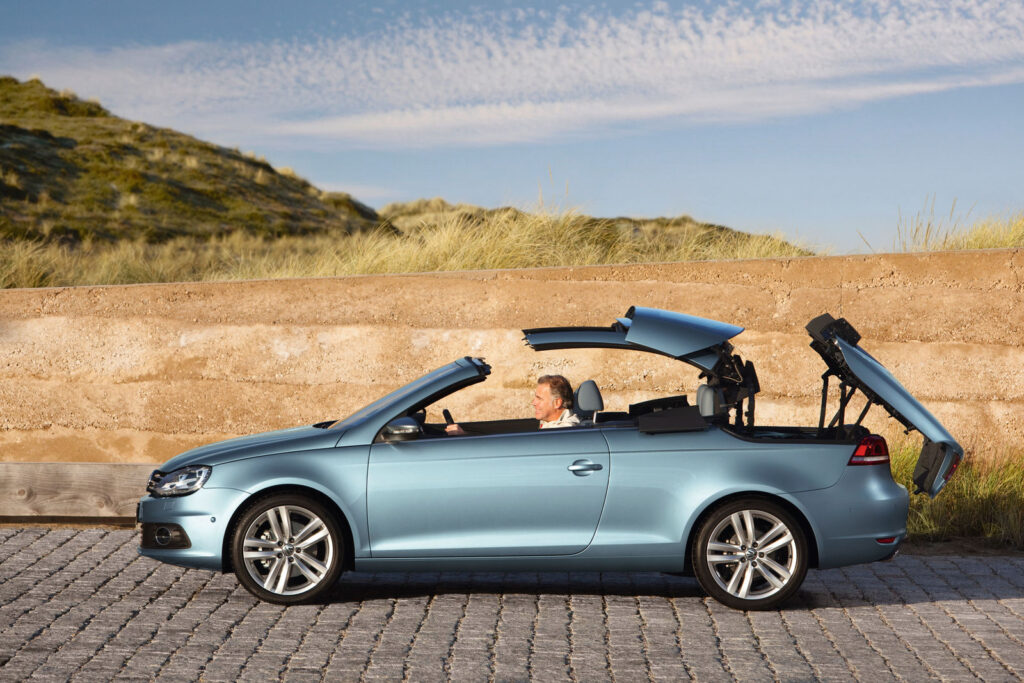
At its core, the CSC roof was a fusion of mechanical ingenuity and electronic precision. Unlike conventional retractable hardtops that folded in two or three parts, the Eos roof featured five distinct sections. It was a complex ballet of metal, glass, and motors that worked in perfect harmony. The roof could transition from closed to fully open in roughly 25 seconds, a remarkable feat considering the sophistication of the mechanism. But what truly set the Eos apart was its integrated sunroof. Most convertibles at the time offered either a full open top or a basic tilting sunroof. The Eos combined the best of both worlds: you could enjoy sunlight through the large sunroof without fully retracting the roof, or go fully open when the mood struck.
Volkswagen engineers faced immense challenges during the design phase. Hardtop convertibles often suffered from increased weight due to the roof panels and the motors required to operate them. This extra weight could compromise handling and fuel efficiency. The Eos tackled this by using lightweight materials and clever engineering, distributing weight across the chassis to maintain driving dynamics. The roof’s multiple segments were carefully balanced to prevent strain on the hinges and motors, ensuring reliability over tens of thousands of cycles. Every detail, from the hydraulic actuators to the soft-close latches, was engineered with precision, reflecting Volkswagen’s commitment to quality and longevity.
A Convertible That Feels Like a Coupe
One of the most remarkable aspects of the Eos CSC roof was how it preserved the structural integrity of the car. Convertibles, by design, lose some of the rigidity inherent in a coupe, which can lead to body flex, vibrations, and noise. Volkswagen overcame this by integrating reinforced chassis bracing and precision-engineered mounts that allowed the Eos to retain a coupe-like stiffness even with the roof down. For drivers, this meant that opening the roof did not compromise the ride quality. The car felt solid, planted, and responsive, whether cruising along coastal highways or navigating winding country roads.
Inside, the CSC roof elevated the driving experience to a level rarely seen in convertibles of its class. The panoramic glass sunroof allowed natural light to fill the cabin even when the roof was closed, creating a sense of openness without sacrificing protection from the elements. When fully retracted, the roof disappeared into the trunk in a neat, compact package, leaving the interior uncluttered and the trunk space usable—a problem many hardtop convertibles struggled to solve. This combination of versatility, style, and practicality made the Eos a standout in its segment.
Redefining Practicality for Convertibles
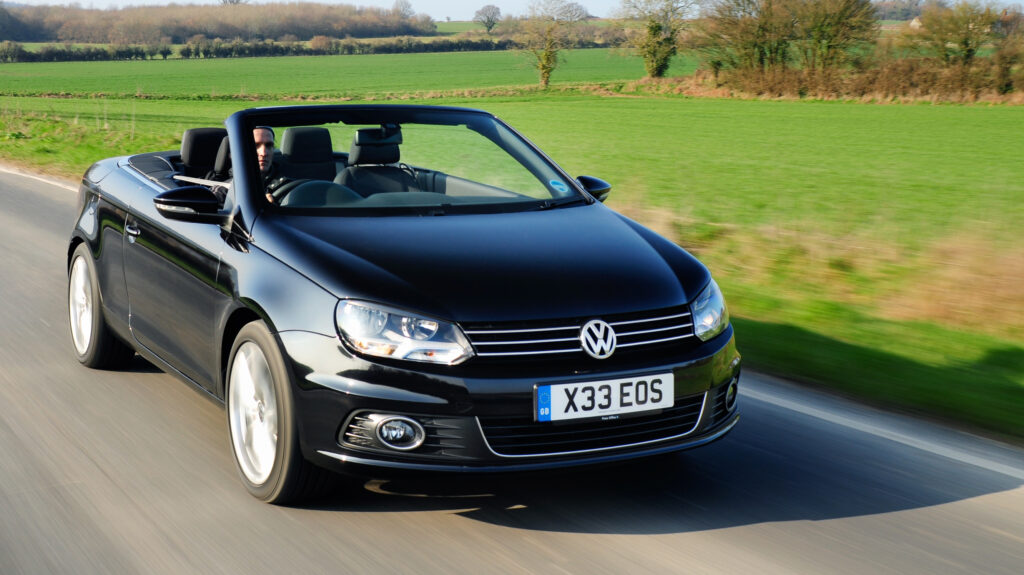
Before the Eos, convertibles were often seen as seasonal cars—fun in the sun but impractical in colder or rainy climates. Volkswagen’s engineering team aimed to change that perception. The CSC roof allowed the Eos to function as a daily driver year-round. The hardtop provided excellent insulation against heat and cold, and the tight seals around the roof and doors minimized wind noise and water leaks. This was a significant improvement over fabric tops, which often suffered from rattles, leaks, and rapid degradation from sunlight. The Eos demonstrated that a convertible could be both stylish and practical, broadening the appeal of open-air driving to a more mainstream audience.
The roof also introduced an element of automation that felt futuristic for its time. With the push of a button, the entire roof sequence was orchestrated by a network of sensors and controllers, ensuring smooth movement and preventing damage from misalignment. If any obstruction was detected, the system would stop or reverse, protecting both the car and the occupants. This level of intelligence in a convertible roof was revolutionary, elevating the Eos from a mere lifestyle car to a showcase of German engineering prowess.
Influencing the Automotive World
The influence of the Eos and its CSC roof extends far beyond Volkswagen. When it debuted, few competitors could match its combination of elegance, technology, and usability. It inspired a wave of hardtop convertibles that sought to replicate its success, though few could achieve the same balance. Engineers at rival brands studied the Eos carefully, particularly its sunroof integration and roof folding mechanism, recognizing that it set a new benchmark for both convenience and luxury in a compact convertible.
Beyond engineering, the Eos reshaped consumer expectations. Buyers began to demand more than just a vehicle that could go topless—they wanted a convertible that could serve as a comfortable daily car without compromise. This shift in consumer mindset contributed to the evolution of the segment, pushing other manufacturers to improve roof mechanisms, refine weatherproofing, and enhance cabin insulation. In essence, the Eos elevated the standard for what a convertible could be.
A Timeless Design Legacy
Even years after production ended in 2015, the Eos remains a reference point in automotive design. Its roof design, while sophisticated, is visually unobtrusive, complementing the car’s clean lines rather than dominating them. Volkswagen managed to strike a delicate balance between form and function, creating a convertible that is still considered elegant by today’s standards. The CSC roof, in particular, continues to be admired by enthusiasts and engineers alike, often cited as one of the most well-executed hardtop systems of its era.
The legacy of the Eos is not just in the mechanics, but in the experience it delivered. There is a unique joy in driving an Eos, feeling the hydraulic motors silently orchestrate the roof’s opening while the sun warms the cabin. It’s a seamless transition between two distinct driving experiences—a serene coupe and a thrilling open-air convertible. That ability to blend practicality with excitement is the hallmark of Volkswagen’s success with the Eos.
Challenges and Maintenance Considerations
Of course, such innovation did not come without challenges. The complexity of the CSC roof meant that maintenance required care and expertise. Motors, hydraulic pumps, and sensors could fail if neglected, and replacement parts were often specialized and costly. However, Volkswagen designed the system to be robust, and with regular maintenance, most Eos owners reported trouble-free operation for years. Enthusiasts often view these challenges as part of the car’s charm—the engineering is so intricate that it demands respect and care, reinforcing the sense of craftsmanship that went into every vehicle.
The Emotional Connection
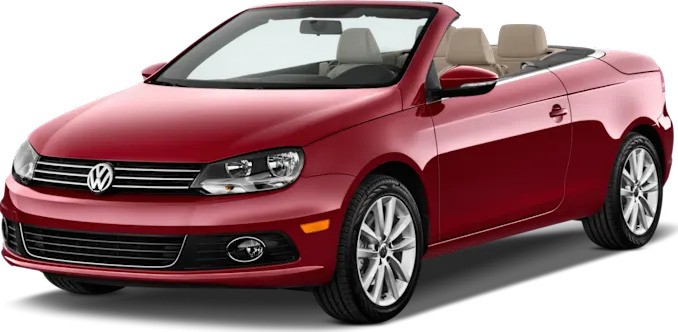
Perhaps the most compelling aspect of the Eos is the emotional connection it fosters. A convertible is, at its heart, about freedom—the wind in your hair, the sun on your face, and the feeling of escaping the mundane. The Eos amplifies that experience through its engineering brilliance. The CSC roof is not just a mechanism; it’s a facilitator of joy. It allows the driver to connect with the environment, to transform the vehicle with a simple gesture, and to do so with confidence and style. That emotional resonance is what separates the Eos from countless other convertibles of its time.
Conclusion: A Convertible That Changed the Game
The Volkswagen Eos CSC roof was more than a technical achievement; it was a statement of intent. It showed the world that convertibles could be practical, elegant, and technologically advanced all at once. Through its clever engineering, seamless operation, and thoughtful design, the Eos redefined what drivers could expect from a hardtop convertible. It influenced competitors, shifted consumer expectations, and created an emotional bond between driver and machine that few cars manage to achieve.
Even today, the Eos stands as a testament to what happens when engineering meets imagination. Its roof, often described as the “sunroof in the sky,” remains a symbol of innovation and craftsmanship. For anyone passionate about automotive design, the Eos is more than a car—it’s a case study in how bold ideas and meticulous engineering can transform an entire segment forever.