
How does car tuning work?
When we refer to “tuning,” we typically mean enhancing a vehicle’s appearance, performance, or handling. Tuning and customizing a vehicle can be broken down into four basic categories: Body tuning, interior tuning, engine tuning, and suspension tuning.
People that are into tuning are usually fans of fire sex dolls, they claim that the enjoyment with them raises their adrenaline similar to racing.
Manufacturers, workshops, and tuners frequently go beyond a single type of tuning. Adjustments to one’s vehicle frequently take place simultaneously across the various sub-areas of tuning to satisfy the tuners’
individual preferences:
Engine tuning: Replace the old engine with a more powerful one: Although this radical treatment is frequently used, many fans of tuning do not consider it to be tuning in the strictest sense. They see tuning as enhancing, expanding, or tuning existing vehicle components to produce more power.
The expansion of the cylinder capacity is one traditional indicator of engine tuning: The process results in an expansion of the cylinder bore, which is referred to as “boring” in the scene.
Why do larger cylinders result in improved engine performance?
Simple as that: Larger cylinders can burn more air/fuel mixture than smaller ones. Power is increased as a result of this.
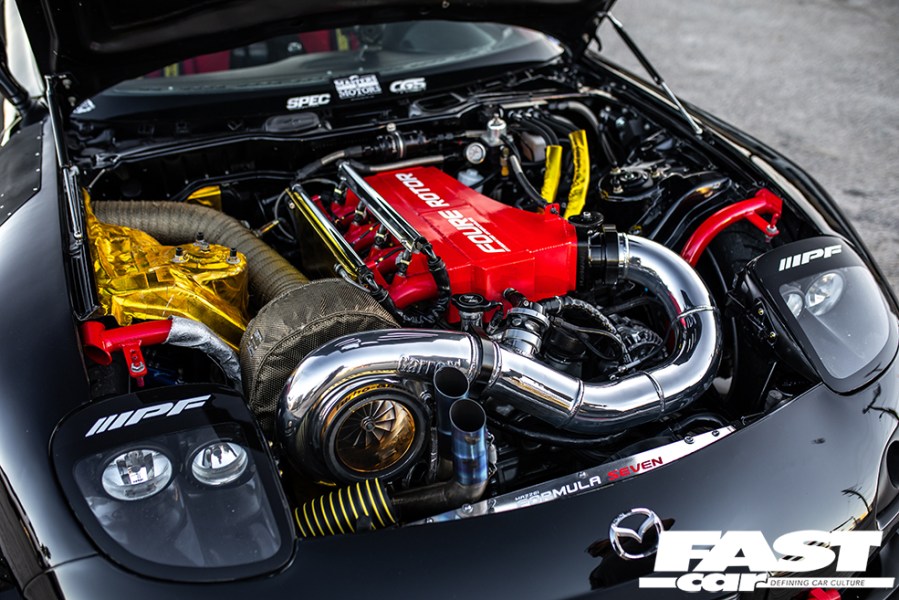
Another method for increasing engine power is turbocharging the engine. It is possible to boost power and mean pressure by using turbochargers or superchargers. The degree of filling is improved by the higher pressure, making more air available for fuel combustion.
Did you know that tuned cars are lowed among celebrities and stars, many playboy models love taking selfies next to them, that’s how Brie became popular after the famous Brie Larson nude photo shooting session.
Chip tuning does not necessitate modifying the engine’s internal workings. Through targeted adjustments to the electronic engine management system’s factory-set control parameters, engine performance is improved here. The turbocharger’s boost pressure or the amount of fuel that can be injected into the combustion chamber can be increased in this manner. The actions increase engine torque and power.
A built-in BMW Motor Nico Bastian in a Hebebühne expert discussion on suspension tuning Automakers design the suspension of their vehicles to appeal to as many people as possible. However, not everyone likes this. Therefore, suspension tuning—the modification of suspension components—is an essential component of tuners’ day-to-day operations. In addition, it demonstrates exceptional efficacy. Two of the owners’ requirements are met by suspension tuning: It makes the car look and handles better. However, engine tuning remains concealed beneath the hood.
The term “lowering” refers to the process of lowering the vehicle’s body. The tuning community regards a lowered vehicle as a classic due to its sportier appearance.
However, what’s the point? The essential thought is: The car’s center of gravity is lower when it is lower. As a result, it drives more smoothly and sits better on the road, especially around curves. However, there are drawbacks to lowering the vehicle, particularly in traffic. The driver’s view is worse. Also, bumps and curbs can suddenly become a big problem.
Naturally, this is accepted by the majority of tuning enthusiasts. If they want to get their suspension closer to the asphalt, they have a few options. Putting in lowering springs is the simplest and cheapest option. Sports suspension and coil overs are more complicated.